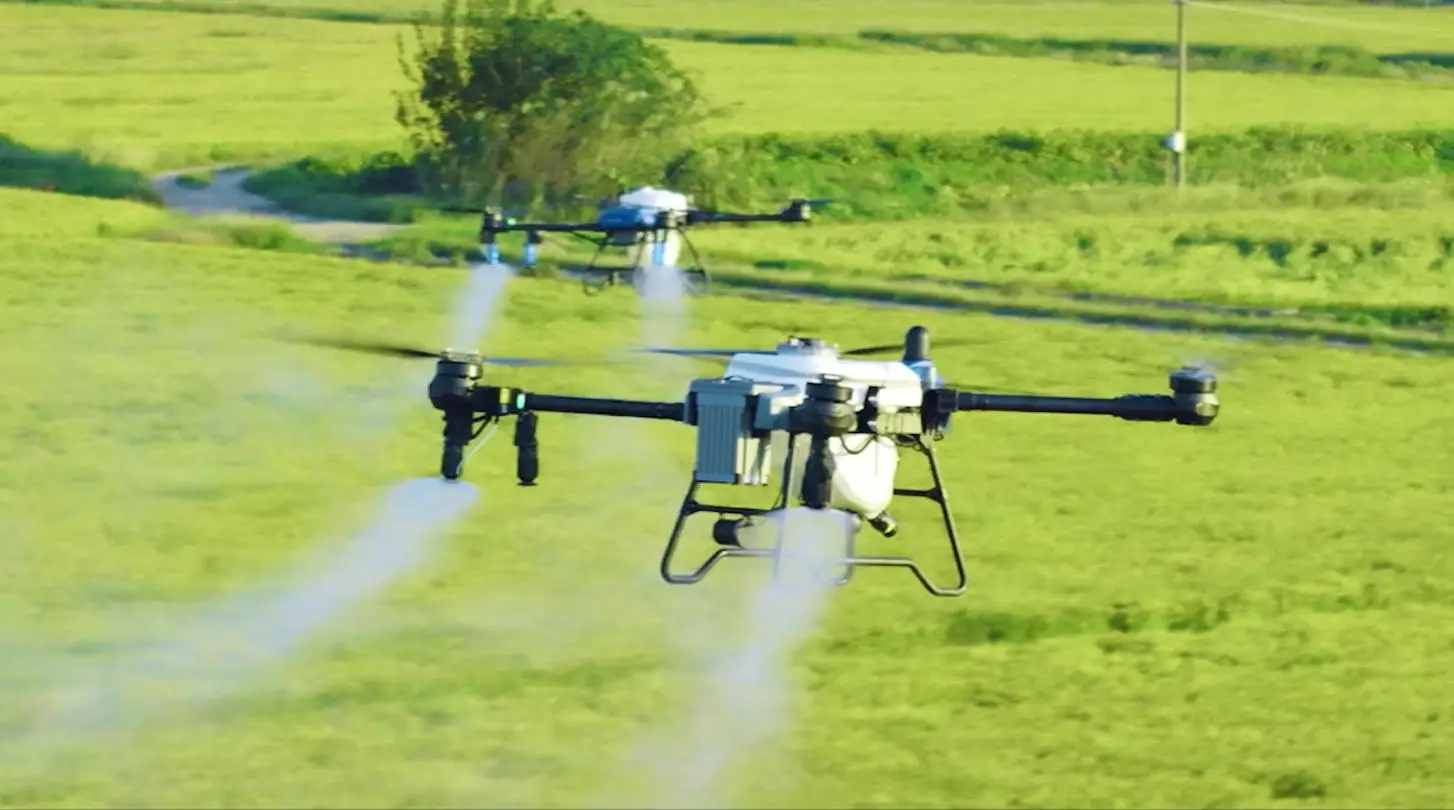

WHY COVERAGE ISN'T ENOUGH
How the EAvision J150 Delivers Full-Depth Canopy Penetration
When most people picture a spray drone at work, they imagine chemical misting over the top of a crop. Wet the leaves, job done. But surface coverage and effective coverage are two very different things — and for Australian growers managing everything from canola paddocks in WA to mango orchards in the Top End, that difference can directly affect your chemical efficacy, your spray bill, and ultimately your yield.
The EAvision J150 was built around a deceptively simple principle: spraying isn't the goal. Penetration is.
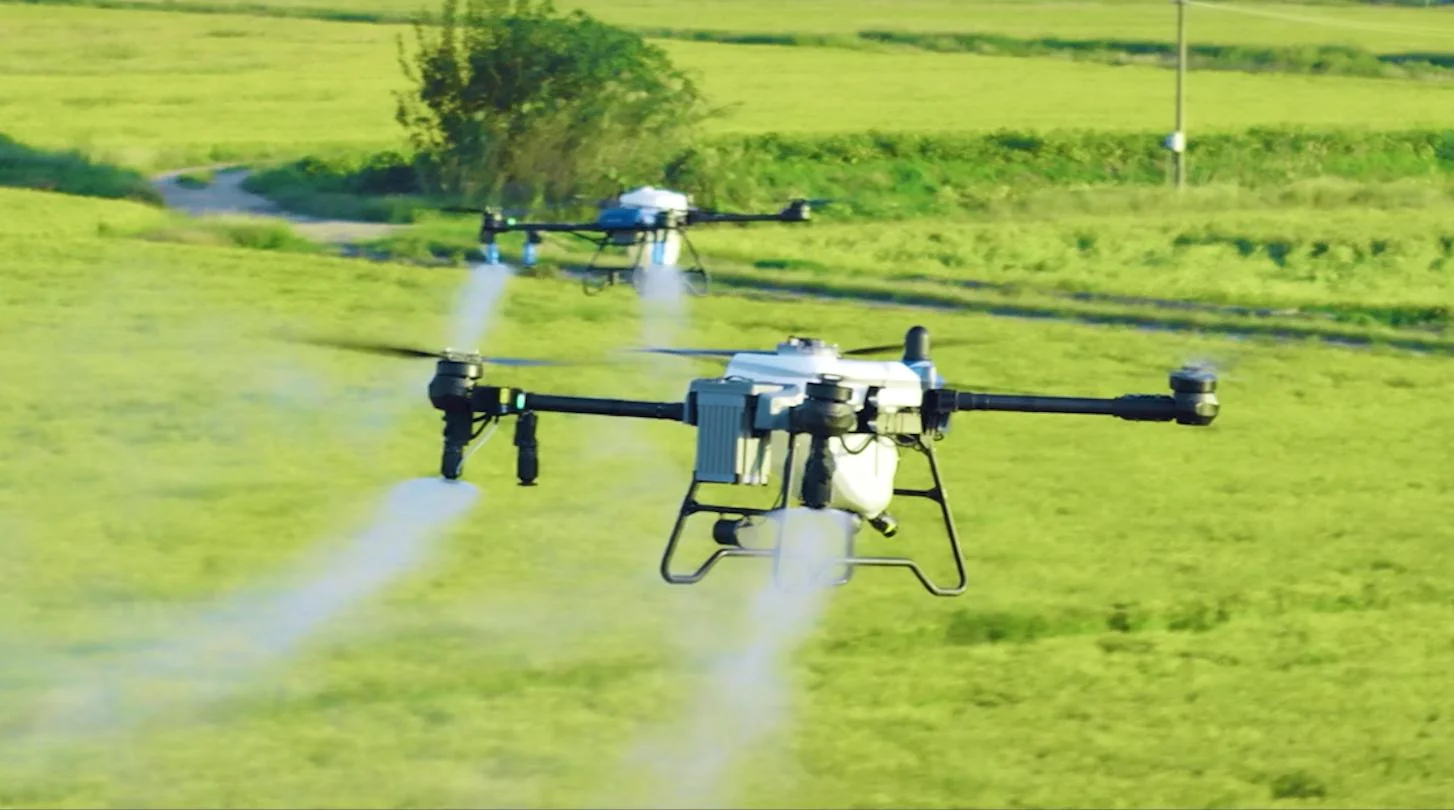
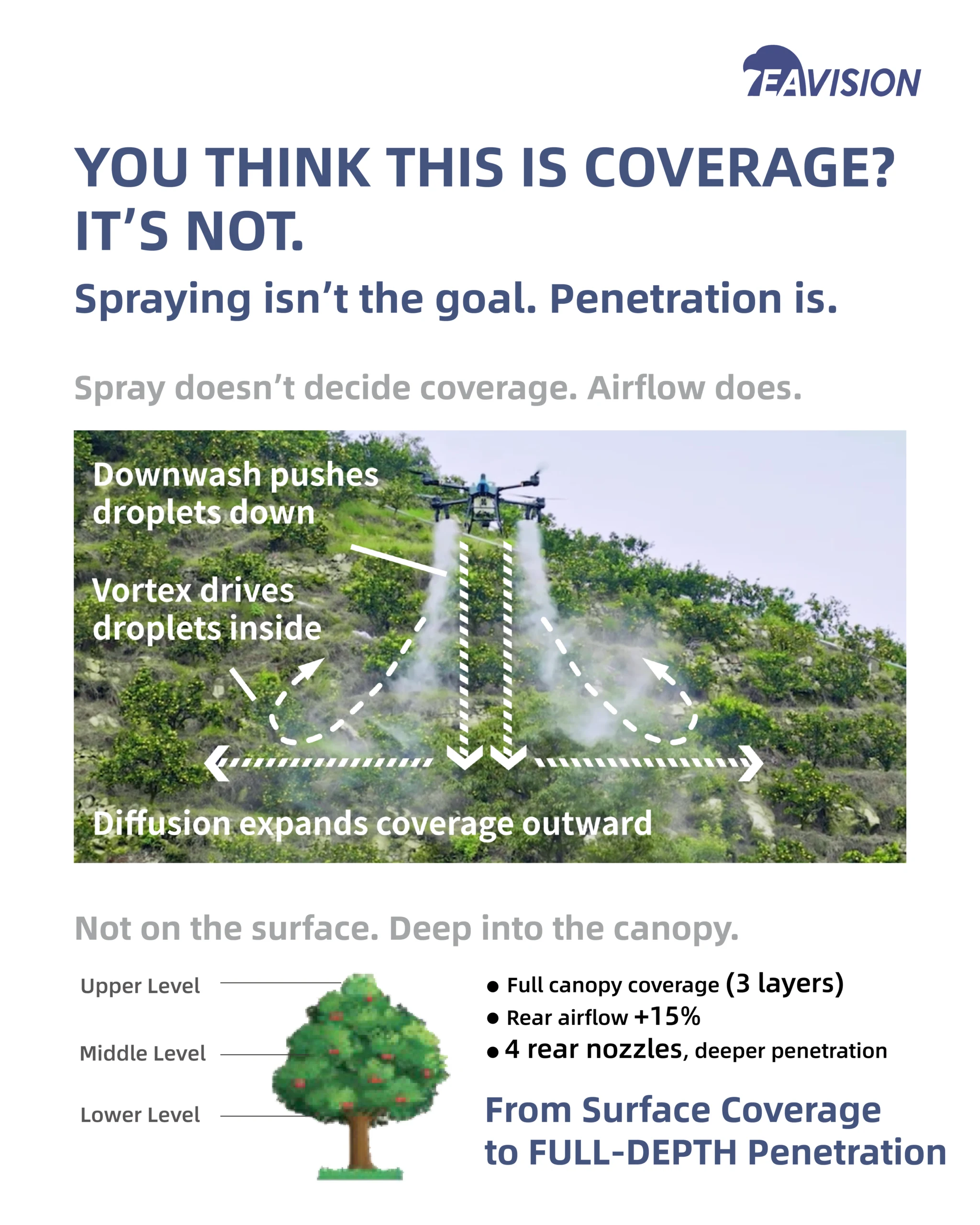
Figure 1 — J150 three-directional airflow: downwash, vortex, and diffusion work simultaneously to drive chemicals deep into the canopy.
The Problem With Traditional Spraying: You've Always Had to Choose
Whether you're running a boom spray, a mist blower, or an entry-level agricultural drone, traditional spraying forces a compromise between two imperfect options.
Fine droplets give you excellent surface coverage and good chemical distribution — but they're highly susceptible to drift, especially in Australian conditions where afternoon winds can pick up quickly. And because fine droplets are lightweight, they sit on top of the canopy rather than penetrating through it.
Coarse droplets drive deeper into the canopy and are far less prone to drift — but they tend to deposit unevenly, leaving gaps in coverage that can allow pests and disease to persist.
For decades, spray operators have had to pick one or the other based on the crop, the chemical, the conditions, and the pest or disease they're targeting. It's always been a trade-off.
The EAvision J150 eliminates that trade-off entirely.

For decades, spray operators have had to pick one or the other based on the crop, the chemical, the conditions, and the pest or disease they're targeting. It's always been a trade-off. The EAvision J150 eliminates that trade-off entirely.
Bimodal Mist Technology: Fine and Coarse in a Single Pass
- Fine droplets (VMD 20–100 mm) coat leaf surfaces densely, ensuring broad chemical coverage across the canopy exterior.
- Coarse droplets (VMD 100–500 mm) carry chemical deep into the canopy structure, reaching the underside of leaves and the inner branches where pests and disease often hide.
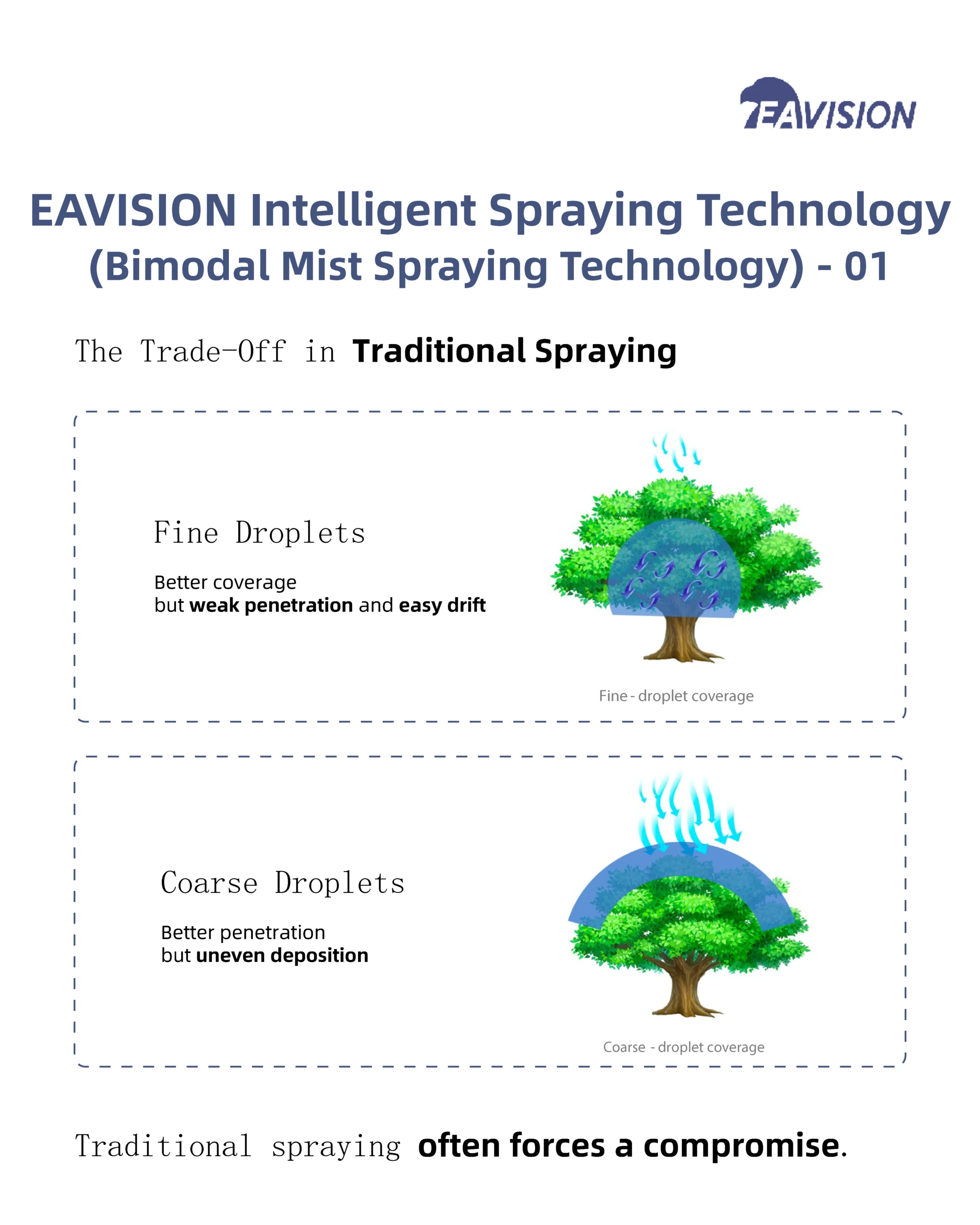
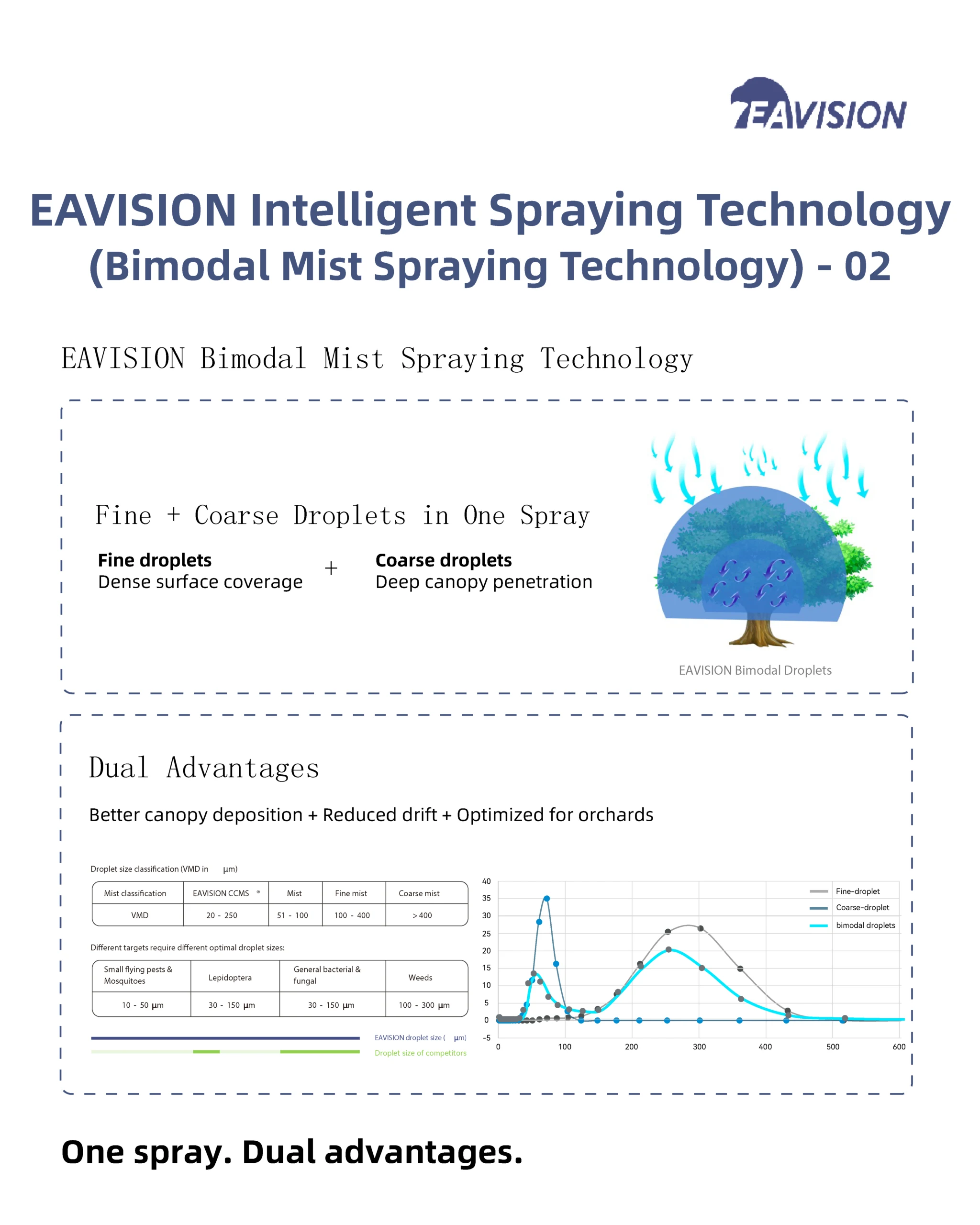
Figure 2 — EAvision Bimodal Mist Spraying Technology: the traditional fine/coarse trade-off (left) versus the J150's dual-droplet solution delivering both advantages simultaneously (right).
Why Droplet Size Matters for Australian Crops
Different pests and diseases require different droplet sizes to be effectively controlled. The J150's adjustable nozzles (10–500 μm across four sizes in a single flight) mean you're not locked into a one-size-fits-all approach:
| Target | Optimal Droplet Size |
|---|---|
| Small flying pests & mosquitoes | 10–50 μm |
| Lepidoptera (moths, caterpillars) | 30–150 μm |
| General bacterial & fungal disease | 30–150 μm |
| Weeds | 100–500 μm |
For Australian growers managing heliothis in cotton, fungal pressure in wheat, or fruit fly in mango — the ability to dial in the right droplet size for the job is a genuine agronomic advantage.
How Airflow Does the Heavy Lifting
Here's the part most drone marketing glosses over: it's not just the spray that determines coverage. It's the airflow.
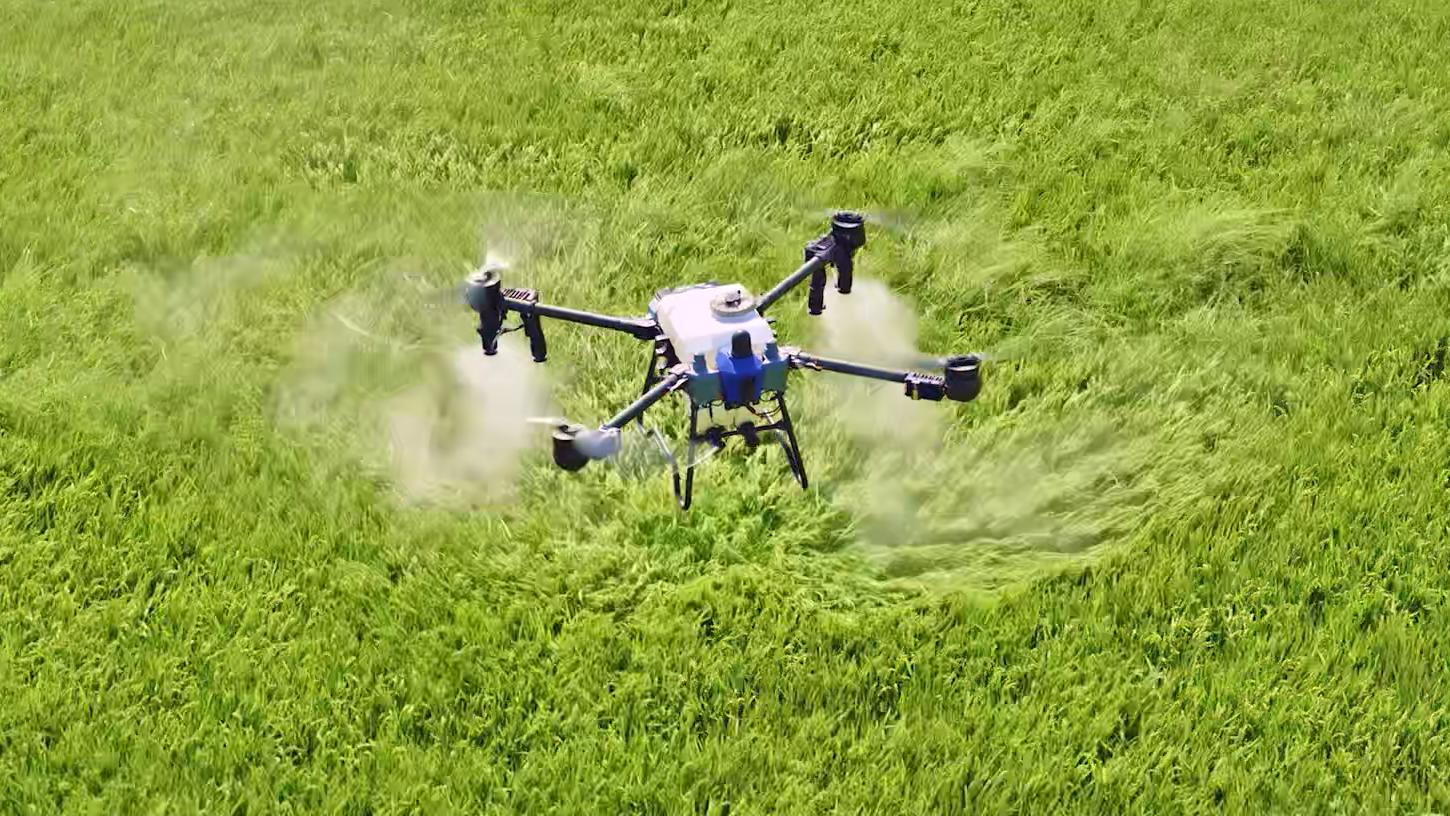
The J150's rotor system generates a powerful, structured downwash pattern that works in three simultaneous directions to drive chemical into the crop:
1. Downwash — The primary rotor downforce pushes droplets vertically downward through the canopy from top to bottom.
2. Vortex — As the rotors spin, they create a circulating vortex that drives droplets inward and sideways, forcing chemical through the middle of the canopy rather than just coating the outside.
3. Diffusion — The expanding airflow at canopy level spreads droplets outward to the edges, maximising lateral coverage width.
Together, these three forces create a multidirectional, multi-layer spray field — achieving full coverage from the canopy surface right down to the lower leaves and stems.
Single Rotor Configuration: Cleaner Downwash, Wider Swath
The J150 is also available in a single rotor configuration, which delivers a cleaner, more focused downwash pattern compared to multi-rotor setups. With fewer competing rotor wash interactions, the airflow column is more defined and consistent — translating directly into an improved swath width and more even deposition across the spray zone. For broadacre operators focused on maximising hectares per hour, this is a meaningful efficiency gain.
Terrain Following and Consistent Swath Width
Here's something that doesn't get talked about enough in drone spraying: swath width is directly affected by ground speed. Fly too fast over rough terrain and the drone slows down, speeds up, or changes altitude — and your effective swath varies with it. Inconsistent swath means inconsistent coverage, no matter how good your nozzles are.
The J150's superior terrain-following system — using dual forward LiDAR, dual phased array radar, and 360° millimetre wave radar — maintains a more constant height above the crop across undulating, sloped, or variable terrain. The result is a more consistent ground speed, which in turn delivers a consistent swath width throughout the entire flight. For Australian growers operating on the hilly country common in Queensland horticulture or the undulating paddocks of the southern grainbelt, that consistency translates directly into more uniform coverage and reduced need for re-spraying missed areas.
Three-Layer Canopy Coverage
The J150 achieves coverage across all three canopy zones simultaneously:
- Upper level — surface coverage via downwash and fine droplets
- Middle level — penetration via vortex airflow and mixed droplets
- Lower level — deep coverage via coarse droplets and diffusion
This matters enormously for crops with dense canopy structures. In sugarcane, pests like stem borers operate deep inside the plant — surface spraying alone won't reach them. In citrus orchards in Queensland or the Riverina, fungal diseases like melanose establish in the inner canopy where conventional boom sprayers and basic drone systems simply can't reach effectively.
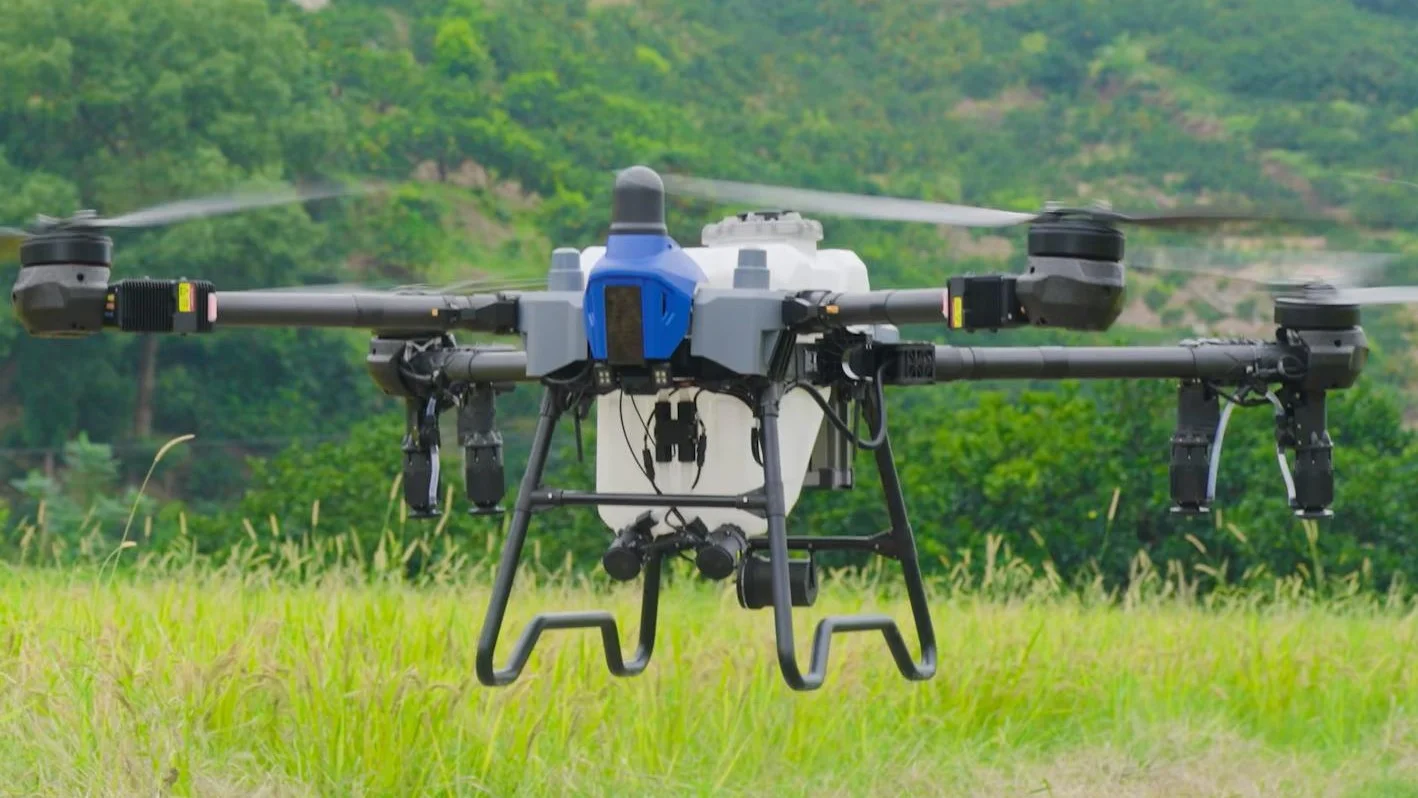
The J150 also features four rear nozzles that increase rear airflow by 15%, specifically designed to push chemical into the back and underside of the canopy — the areas most frequently missed by competing systems.
What This Means Across Australian Crop Types
Broadacre — Wheat, Barley, Canola
In broadacre, speed and coverage width are the priority. The J150's 48 km/h operating speed and swath capability mean you can cover large paddocks efficiently, while the bimodal droplet system ensures fungicide and herbicide applications are penetrating the canopy rather than sitting on top of it. In a dense wheat crop at GS59–65, that penetration is critical for stripe rust and septoria control.
Horticulture — Citrus, Mangoes, Macadamias
This is where the J150's canopy penetration advantage is most significant. Tree crops have multi-layer canopies where fungal disease and insect pests can establish in areas ground-based equipment struggles to reach. The J150's vortex airflow system is engineered precisely for this environment — and its terrain-following capability means it can operate effectively on the slopes and undulating ground common in Queensland and Northern Territory orchards.
Cotton & Sugarcane
High-value row crops with significant spray costs per hectare. Here, the ability to reduce chemical rates while maintaining or improving efficacy — by ensuring more of your product actually reaches its target — can deliver measurable ROI per application. The J150's precision droplet control also supports refuge management and reduces off-target drift, which is increasingly important under APVMA label requirements.
Frequently Asked Questions
How is the EAvision J150's spraying technology different from DJI Agras drones?
The J150 uses a bimodal droplet system that simultaneously delivers fine and coarse droplets in a single pass — something most competing systems, including standard DJI Agras configurations, don't offer. Combined with the J150's three-directional airflow system (downwash, vortex, and diffusion), it achieves deeper canopy penetration rather than surface-only coverage.
What droplet sizes can the EAvision J150 produce?
The J150's nozzles are adjustable from 10 to 500 microns (VMD), covering ultra-fine mist through to very coarse droplets. Four droplet sizes are available within a single flight, selectable based on target pest, disease, or weed.
Is the EAvision J150 suitable for Australian orchard spraying?
Yes. The J150 is specifically designed for complex canopy structures including orchards. Its terrain-following capability, 180° escape manoeuvre, and vortex airflow system make it well-suited to the sloped, tree-dense environments common in Australian horticulture including mango, citrus, and macadamia operations.
Does the J150 reduce chemical drift compared to boom sprayers?
The bimodal droplet system is designed to reduce drift by using coarse droplets for penetration (which are far less susceptible to wind drift than fine droplets alone) while maintaining surface coverage via fine droplets. Operating the J150 at the recommended height and speed further minimises off-target movement.
What flow rate does the EAvision J150 achieve?
The J150 delivers a flow rate of up to 40 litres per minute via its 2000W FOC ESC, enabling continuous high-volume spraying across large areas without sacrificing droplet quality.
Can the EAvision J150 be used for fungicide applications in wheat and canola?
Yes. The J150's droplet size range (30–150 μm) aligns with the recommended droplet size for fungal and bacterial disease control, and its canopy-penetrating airflow system helps ensure product reaches the infection sites within the crop canopy.
The Bottom Line
Drone spraying technology has moved well beyond "does it spray" as the benchmark question. For Australian growers and spray contractors making a capital investment in this equipment, the right question is: does it get the chemical where the pest or disease actually is?
The EAvision J150's bimodal mist technology and three-directional airflow system represent a genuine step forward in answering that question — not as a marketing claim, but as a function of how the physics of droplet size and airflow actually work.
For crops as diverse as Queensland sugarcane, Victorian cereal crops, and Northern Territory mango orchards, the ability to achieve full-depth canopy penetration in a single pass — at 48 km/h, across a wide swath, with precise droplet control — is a meaningful operational advantage.
EAvision Australia supplies the J150 agricultural spray drone to farmers and spray contractors across Australia. Contact us to discuss your operation or request a demonstration.