
EAvision J150 vs DJI T100 vs XAG P150 Pro: Full Feature Comparison
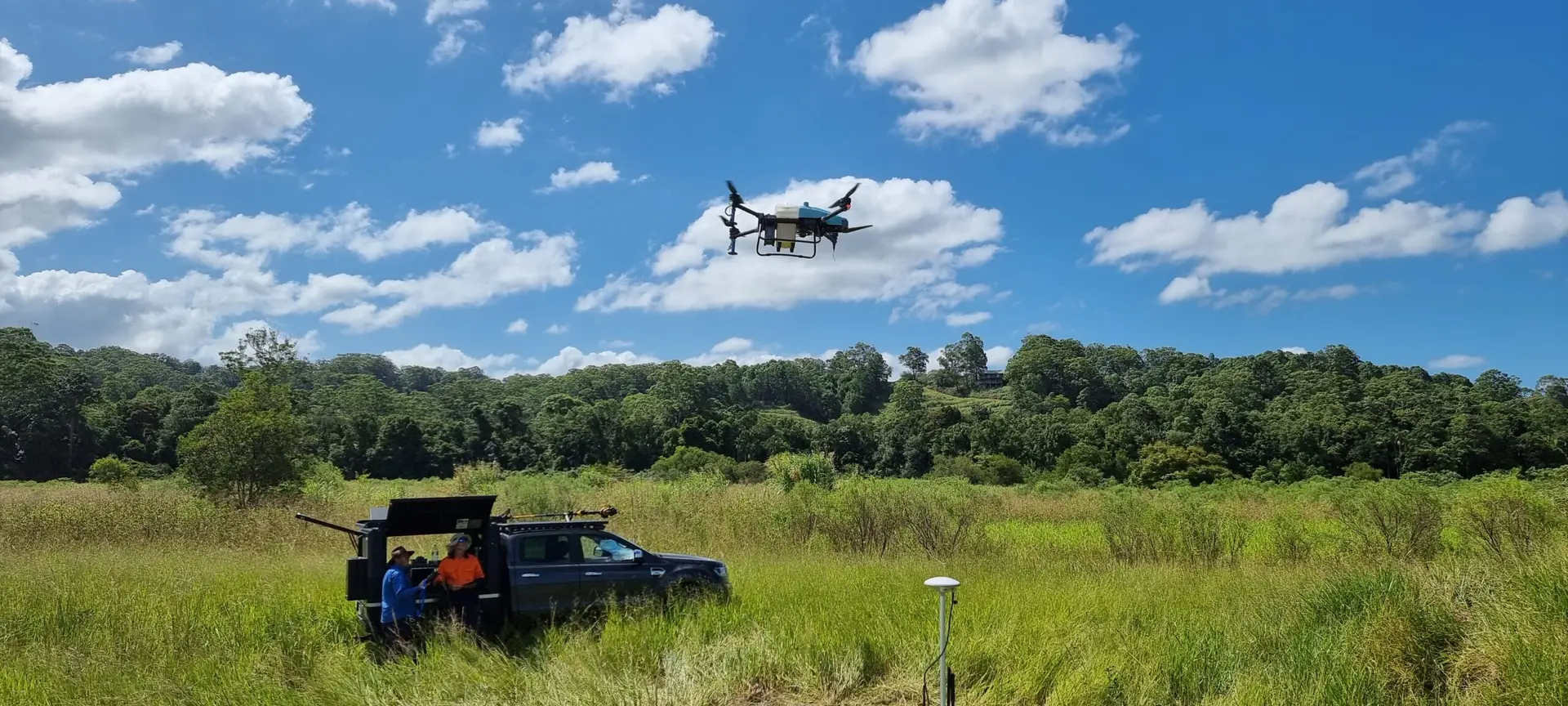
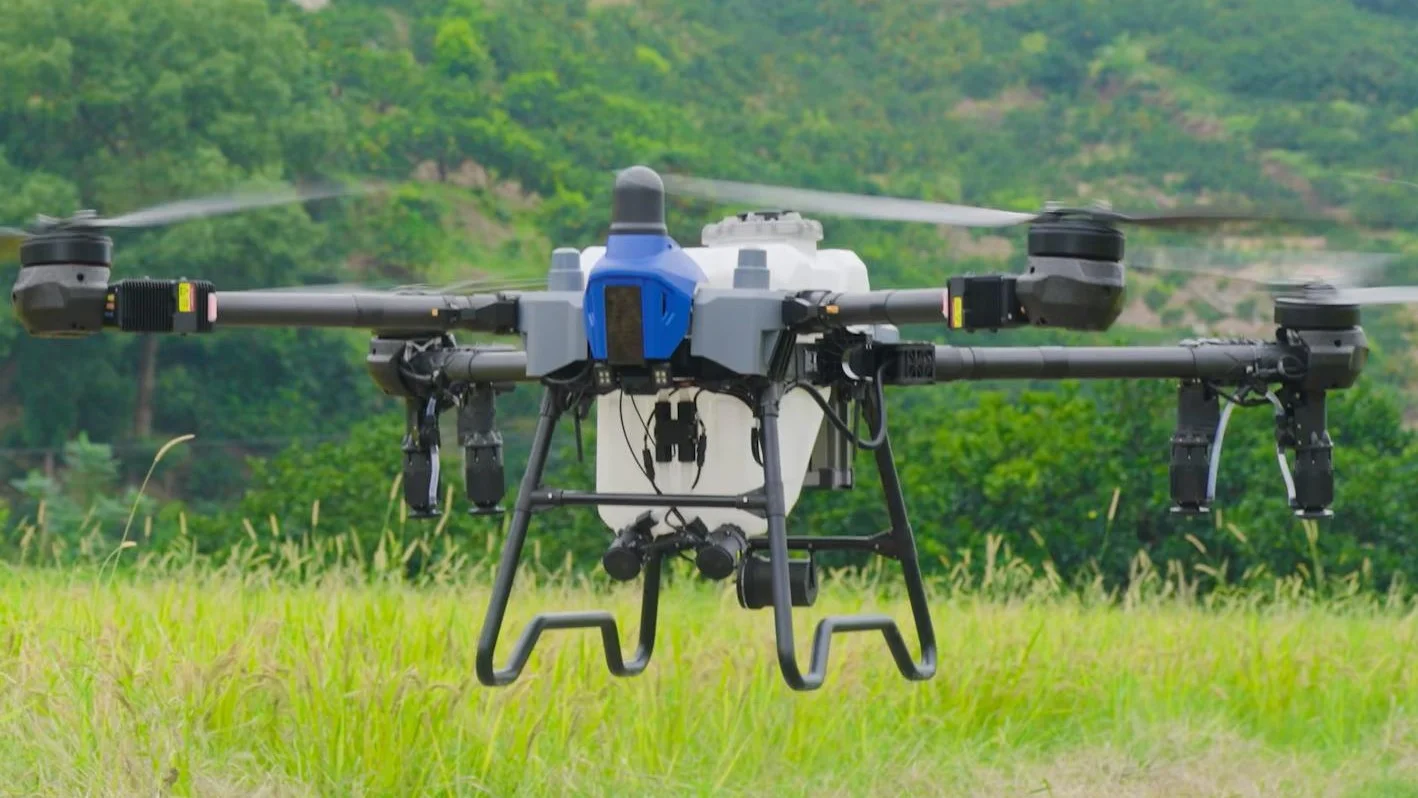
Choosing the right agricultural spray drone is one of the most significant purchasing decisions a farming operation can make. The EAvision J150, DJI Agras T100 and XAG P150 Pro are the three heaviest-duty agricultural drones currently available in Australia — all sitting at or near the 149kg MTOW limit. On paper they look similar. In the field, the differences are significant.
*Important note for clarity. The DJI T100 is approved in Australia in the medium category, which limits its legal Take - Off Weight to 149.9kg. We have used this weight for comparison purposes, as exceeding this weight will impact warranty and insurance coverage. (including all liability claims). We cover this in more detail below.
We've compiled this comparison from manufacturer specifications, independent test data and our own operational experience flying the J150 across Australian conditions. The goal is to give Australian farmers a straight, data-driven answer to one question: which drone is right for your operation?
| EA - J150 | DJI - T100* | XAG - P150 Pro | |
|---|---|---|---|
| MTOW* | 149.5kg | 149.9kg | 125kg spray / 149kg spread |
| Empty Weight (with Battery) | 70kg | 70kg | 54kg / 58kg |
| Max Payload* | 79kg | 79kg | 71kg / 91kg |
| Liquid Tank Capacity | 73lt | 100lt | 70lt |
| Spreader Capacity | 100lt | 150lt | 115lt |
| Spray System | EA - J150 | DJI - T100* | XAG - P150 Pro |
|---|---|---|---|
| Nozzle Config | 4 Rear | 2 Std / 4 Option | 2 Rear |
| Max Flow Rate | 40 L/min | 30 L/min / 40 L/min | 30 L/min |
| Swath | 4 - 10m | 4 - 10m | 4 - 10m |
| Droplet Size | 10um - 500um | 50um - 500um | 60um - 500um |
| Multi Nozzle Spray Setting | Fitted | Not Fitted | Not Fitted |
| Spreader System | EA - J150 | DJI - T100* | XAG - P150 Pro |
|---|---|---|---|
| Max Load | 79kg / 100L | 79kg / 150L | 91kg 115L |
| Spreading Rate | 280 kg/min | 400 kg/min | 300 kg/min |
| Spread Swath | 9m | 10m | 9m |
| Radar System | EA - J150 | DJI - T100* | XAG - P150 Pro |
|---|---|---|---|
| Lidar | Dual Fwd LiDar | Single Fwd LiDar | Not Fitted |
| Active Phase Radar | Dual | Dual | Not Fitted |
| 360 Millimeter Radar | Single Lower Radar | Not Fitted | Single |
| Scan Rate | 900,000 points/sec | 300,000 points/sec | 10,000 points/sec |
| Detection Range | 0.5 - 150m | 1.5 - 60m | 1.5 - 100m |
| Minimum Obs Diameter | 1cm | 1cm | 5cm |
| Obstacle Avoidance Speed | 13.8 m/s | 13.8 m/s | 18 m/s |
| Power System | EA - J150 | DJI - T100* | XAG - P150 Pro |
|---|---|---|---|
| Propellers | 4 x 63in | 8 x 63in | 4 x 62in |
| Motor Pulling Force | 71kg | 82kg | 60kg |
| Battery | 45,000 mAh | 41,000 mAh | 20,0000 mAh x 2 |
| Hover Empty | 19.5 min | ? | 19.4 min |
| Hover 30kg payload | 9.2 min | 7.1 min** | ? |
| Hover 75kg payload | 5.5 min | 4.2 min** | 5 min |
| Charger | EA - J150 | DJI - T100* | XAG - P150 Pro |
|---|---|---|---|
| Charger Type | 13,000 watt single Phase | 12,000 watt dual phase 10,000 watt single phase | 3600 watts single phase x 2 |
* DJI T100 max weight to meet legislation requirements. (Legal limit)
** Hover Test information for T100 supplied by Drones 4 Hire product testing video
How does the EAvision J150 compare to the DJI T100?
The DJI T100 and EAvision J150 share the same MTOW (149.9kg vs 149.5kg) and maximum payload (79kg each), but they diverge significantly in their radar and sensing systems — the area that matters most for safe, autonomous operation across complex Australian terrain.
The J150 runs dual forward LiDAR scanning at 900,000 points per second with a detection range of 0.5–150m and a minimum detectable obstacle diameter of 1cm. The T100 uses a single forward LiDAR scanning at 300,000 points per second with a detection range of 1.5–60m. In practical terms, the J150 sees three times more data points, detects objects at nearly three times the range, and starts detecting from half a metre versus the T100's 1.5m minimum. On terrain with irrigation risers, fence posts or tree branches, that difference is meaningful.
On tank capacity, the DJI T100 looks like it holds the edge — 100L spray tank vs the J150's 75L. Its 150L spreader is also larger in volume than the J150, coming in at 100L.
However, as indicated above, the DJI T100 is limited to 149.9kg Take Off Weight to meet CASA limitations. While not being able to claim warranty for faults may be of some consideration, a lack of insurance coverage could turn out to be a significant issue, especially when it comes to liability. If you find yourself in a situation where the drone has been the cause of property damage due to contact or spray drift, for example, you may find that you are not covered due to the illegal operation.
Radar and obstacle avoidance — where the J150 pulls ahead
This is the clearest area of differentiation between the three drones:
The XAG P150 Pro has no LiDAR and no active phased radar — its obstacle avoidance relies solely on millimetre radar at 10,000 points per second. This is a significant limitation for complex terrain. The J150's 900,000 point scan rate is 90 times the XAG and 3 times the DJI, giving it substantially finer environmental awareness at speed.
Battery and hover time compared
At maximum payload (75kg), the J150 delivers 31% more hover time than the T100 (5.5 min vs 4.2 min). The J150's 45,000mAh battery is the largest of the three, versus the T100's 41,000mAh and XAG's dual 20,000mAh configuration.
Spray system differences
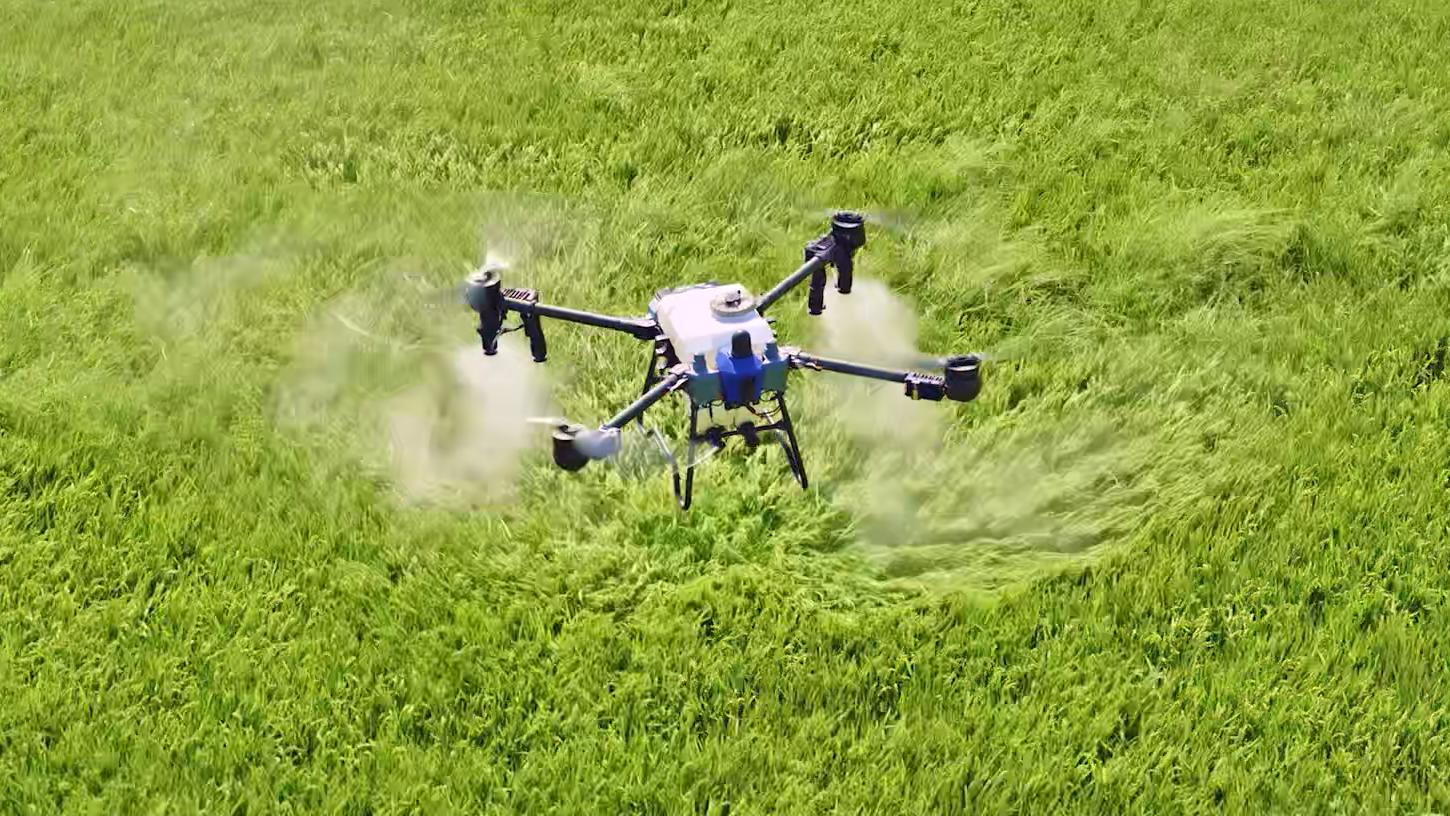
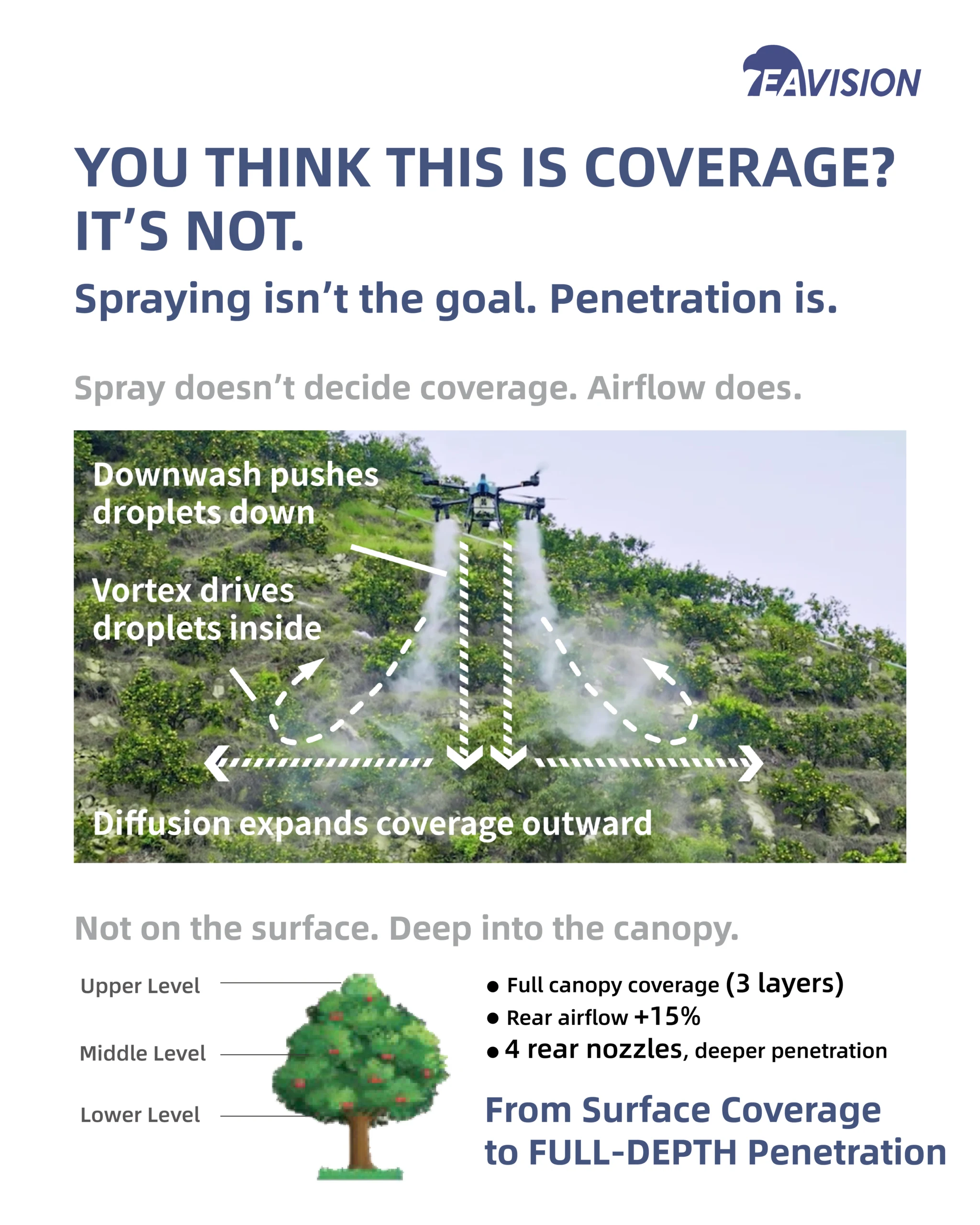
All three drones cover a spray swath of 4–10m and support variable droplet sizing — but the J150 has a broader droplet range and a unique multi-nozzle spray setting not available on the T100 or P150 Pro:
- Droplet size: J150 10–500μm · DJI T100 50–500μm · XAG P150 60–500μm
- J150 starts at 10μm — enabling ultra-fine misting applications not possible on the T100
- Multi-nozzle spray setting: J150 fitted as standard · DJI and XAG: not fitted
- Max flow rate: J150 40 L/min · DJI T100 30–40 L/min · XAG P150 Pro 30 L/min
- Nozzle config: J150 four rear nozzles · T100 two standard / four optional · XAG two rear
Australian compliance — MTOW, CASA and local support
All three drones operate at or near the 149kg MTOW limit set by CASA for RPA (Remotely Piloted Aircraft) in Australia. All require a RePL (Remote Pilot Licence) and ReOC (Remote Operator Certificate) for commercial operations.
Where EAvision Australia differentiates is local support. EAvision Australia is the manufacturer's authorised Australian distributor with an experienced local team providing sales, on-site setup, training coordination and after-sales service.
EAvision Australia has a clear and simplified support structure. We provide a single point of contact for all warranty and other support needs. Spares parts are supplied from an Australian-based warehouse, and telephone-based support is always available.
DJI and XAG distribute through dealer networks with varying levels of localised support.
Parts availability, response time on technical issues, and operator training are real considerations for farming operations that depend on these machines commercially. EAvision Australia partners with CASA-approved training providers as part of its complete drone packages.
Which agricultural spray drone is right for your operation?
There is no single answer — the right drone depends on your terrain, operation size and how you work. Here's a plain-language guide:
| Choose the EAvision J150 if:
|
| Consider the DJI T100 if:
|
| Consider the XAG P150 Pro if:
|
Frequently Asked Questions
Is the EAvision J150 better than the DJI T100 for Australian conditions?
For most Australian terrain — particularly hilly, mixed or obstacle-dense environments — yes. The J150's dual LiDAR at 900,000 points/second and 0.5–150m detection range significantly outperforms the T100's single LiDAR at 300,000 points/second and 1.5–60m range. The T100 holds a tank capacity advantage (100L vs 73L spray) which suits flat, open broadacre operations with minimal obstacles. It's also important to note that the DJI T100 is approved in Australia in the medium category, which limits its legal take-off weight to 149.9kg — exceeding this impacts warranty and insurance coverage including all liability claims.
What is the tank capacity difference between the EAvision J150 and DJI T100?
The DJI T100 has a 100-litre spray tank and 150-litre spreader capacity. The EAvision J150 has a 73-litre spray tank and 100-litre spreader capacity. The T100 holds more per tank load, meaning fewer refill stops on open ground. The J150's advantages are in radar performance, obstacle avoidance and local Australian support — including a single point of contact for all warranty and support needs, spare parts from an Australian-based warehouse, and telephone support always available.
Which agricultural drone has the best obstacle avoidance in Australia?
Based on published specifications, the EAvision J150 leads on obstacle avoidance: dual forward LiDAR at 900,000 points/second — 3 times the DJI T100 and 90 times the XAG P150 Pro — with detection from 0.5m at up to 150m range and a minimum detectable obstacle diameter of 1cm. The XAG P150 Pro has no LiDAR and no active phased radar, relying solely on millimetre radar at 10,000 points/second.
Is the EAvision J150 CASA approved in Australia?
Yes. The EAvision J150 operates at 149.5kg MTOW and is fully compliant for commercial agricultural operations in Australia. Operating it commercially requires a RePL (Remote Pilot Licence) and the operating organisation must hold a ReOC (Remote Operator Certificate). EAvision Australia can connect operators with CASA-approved training providers as part of a complete drone package.
How does the EAvision J150 radar system compare to DJI and XAG?
The EAvision J150 runs dual forward LiDAR (900,000 pts/sec, 0.5–150m range), dual active phased array radar, and a single lower 360° millimetre radar. The DJI T100 has single forward LiDAR (300,000 pts/sec, 1.5–60m range) and dual active phased radar but no 360° radar. The XAG P150 Pro has no LiDAR, no active phased radar, and a single 360° millimetre radar at just 10,000 pts/sec.
What local support does EAvision Australia provide?
EAvision Australia is the manufacturer's authorised Australian distributor providing sales, on-site setup, training coordination and after-sales service. We provide a single point of contact for all warranty and support needs. Spare parts are supplied from an Australian-based warehouse and telephone-based support is always available.
Which spray drone is best for broadacre farming in Queensland?
For large broadacre operations in Queensland — particularly areas like the Darling Downs, Central Highlands or the Burdekin — the EAvision J150 is well suited to the varied terrain and long operating days. Its 19.5-minute hover time empty and 9.2-minute hover at 30kg payload, combined with its 13,000-watt single-phase charger, supports efficient field rotation. Contact EAvision Australia at eavisionaustralia.com or call 1300 663 221.