
A complete agricultural spray drone package in Australia starts at $26,861 including GST and runs to $48,315 for a heavy-lift broadacre setup. That is the drone, batteries, tank, nozzles, charger, remote and software — a working setup, not a bare airframe. Financed over 60 months, the same machines sit between $132.39 and $234.38 a week.
The sticker price is only part of it. Below are EAvision's current Australian prices, what each package contains, the running costs nobody puts on a quote, and an honest way to work out your own payback.
What an agricultural drone costs in Australia
All prices include GST and are current as at 06/08/2026. Weekly figures are indicative finance over 60 months through Australian Equipment Finance, conditions apply.
| Package | Tank | Price inc GST | From, per week |
|---|---|---|---|
| J100 Base | 45 L or 60 L | $26,861 | $132.39 |
| J70 Base | 45 L | $27,961 | $137.62 |
| J100 Professional | 45 L or 60 L | $31,515 | $154.52 |
| J70 Professional | 45 L | $34,610 | $169.23 |
| J150 Professional | 73 L | $48,315 | $234.38 |
Two things in that table are worth pausing on. First, the J100 Base is the cheapest way into the range — $1,100 less than the J70 Base, with the option of a larger 60-litre tank. If entry price is the deciding factor, the J100 is the answer, not the smaller-numbered model.
Second, the gap between Base and Professional is capability, not trim. Professional adds nozzles, a third battery on the J70, and the spreader. If you intend to spread as well as spray, Professional is not optional — you would spend more adding the hopper afterwards. The compact S40 is not yet priced for Australia.
What is actually in the package
A complete package compares poorly against a bare airframe on price because the airframe alone will not get you through a day's work. Every EAvision package includes batteries, tank, nozzles, charger and cooler, remote, survey tool and lifetime software access, delivered from the Brisbane warehouse.
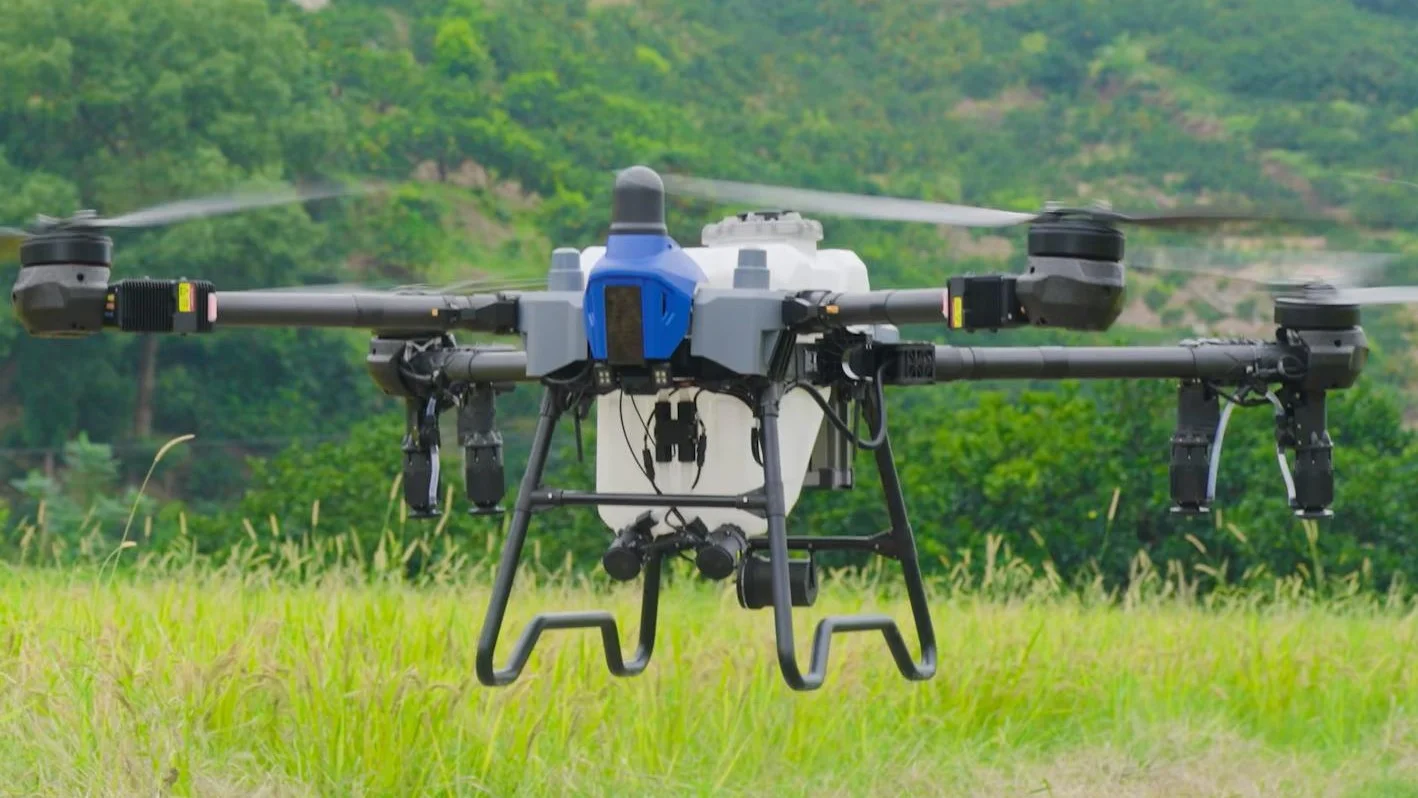
The J150 Professional at $48,315 carries three 45 Ah batteries, a 73 L tank, four CCMS 6.0 nozzles, dual front LiDAR, upper and rear rotating radar and the 100 L precision spreader. Base packages drop to two batteries and two nozzles, and do not include the spreader.
What drives the price up
Capacity is the main driver. But the difference between two quotes at a similar headline price usually comes down to what is bundled. Here is what the components cost if you add them later.
| Component | Price inc GST |
|---|---|
| J150 45 Ah battery | $3,328 |
| J70 / J100 29 Ah battery | $2,945 – $3,240 |
| J70 SPD70 precision spreader | $3,410 |
| J150 SPD100 precision spreader | $3,245 |
| C60 charger, 13,000 W | $3,336 |
| RTK / Relay BAS60 base station | $2,780 |
| RC60 remote control | $1,900 |
| CCMS spray nozzle, complete | $635 |
Run those numbers against a cheaper quote. A J150 sold without a charger, spreader and third battery is roughly $9,000 to $10,000 short of a working setup, and that gap does not appear until you try to do a day's work.
The costs that are not on the quote
Ground support
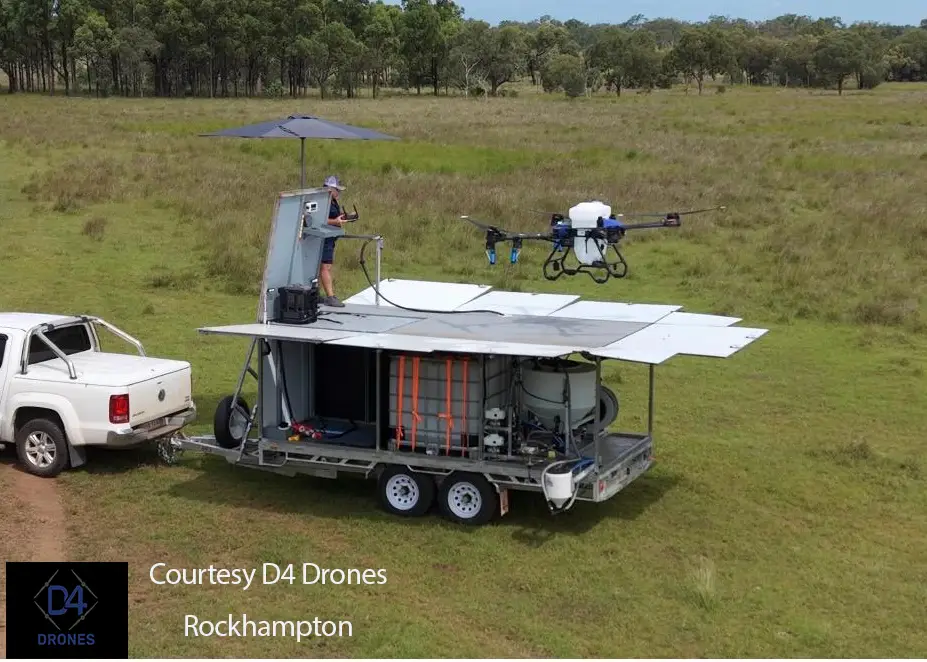
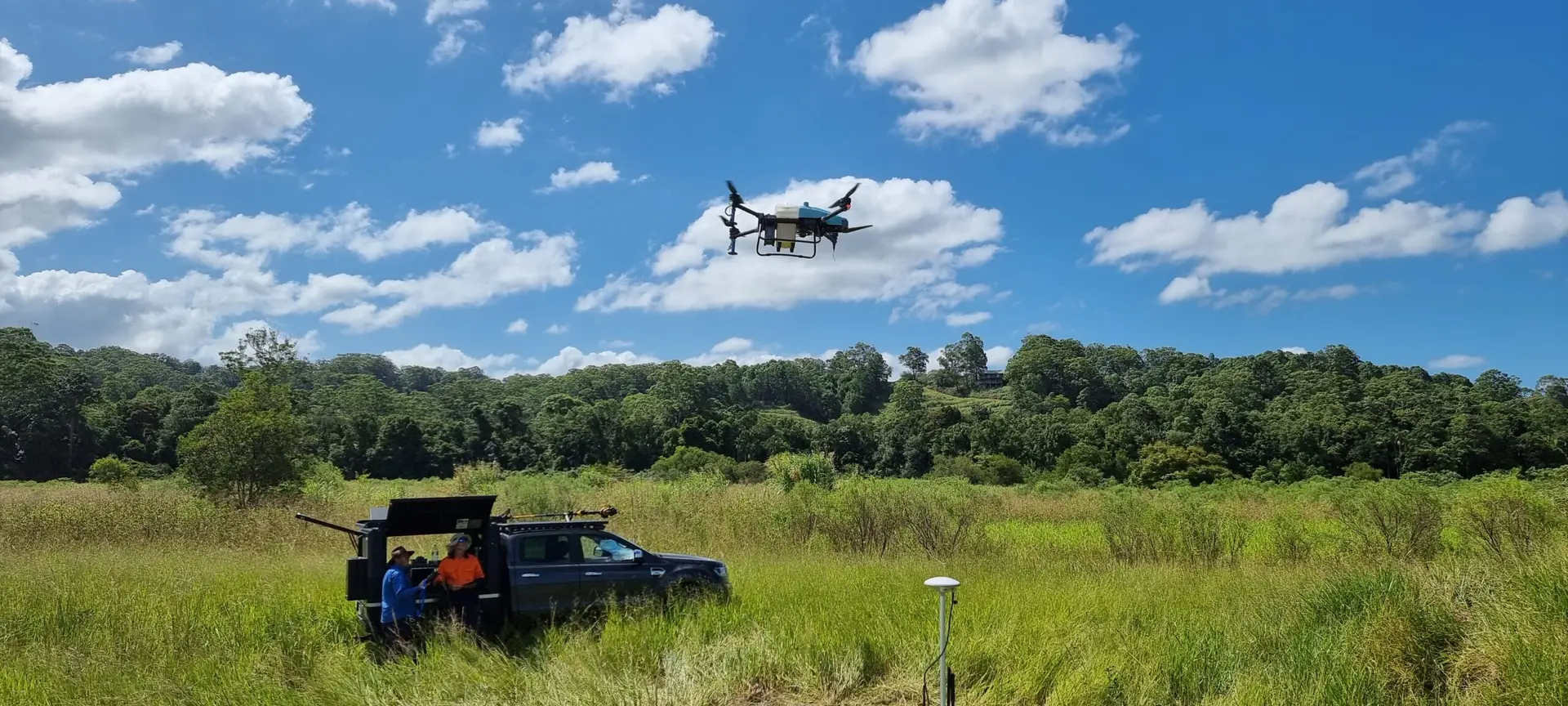
A heavy-lift drone charging batteries in a paddock needs power and water on site. The North Queensland J150 trial ran on a 24 kVA diesel generator, a 1,000-litre IBC and an 800-litre mixing tank. EAvision does not supply or price that gear — budget for it separately, and be realistic, because it sets your hectares per hour. Around 30 minutes of that 4-hour-45-minute job went on waiting for water. Our guide to ground rig setups covers what a workable rig looks like.
Licensing and training
You cannot legally spray commercially without a CASA Remote Pilot Licence, and above 25 kg the rating is type-specific. Commercial work also needs an operator's certificate unless you are spraying land you own and taking no payment. On top sits state chemical licensing — in Victoria the operator and pilot licences together run $1,105.25 for three years, plus the training units behind them.
Batteries over the life of the machine
Batteries are consumable and will need replacing before the airframe does. At $2,945 to $3,328 each, with two or three in a working set, this is the largest recurring cost of ownership. EAvision does not publish a cycle life figure, so ask your distributor what they are seeing in the field before you model a replacement schedule.
Working out your own payback
We are not going to quote you a payback period, because it would be a made-up number. Contract rates vary widely by region, crop and job type, and anyone who tells you a drone pays for itself in X months without asking your rate is guessing. Work it out properly instead:
Weekly payment ÷ your rate per hectare = hectares per week to cover the finance
For a J150 Professional that is $234.38 a week. At the 21 hectares an hour the J150 achieved in North Queensland, that comes to a modest slice of a single working day for most contractors. Then add what does not appear on an invoice: contractor spray bills you stop paying, ground rig fuel and hours you stop burning, compaction you stop causing, and the jobs you currently leave undone or do late. That last category is the one growers underrate — a pass that happens on time rather than a week late never shows up as a saving, but it shows up in the crop.
Frequently Asked Questions
How much does an agricultural spray drone cost in Australia?
Complete EAvision packages range from $26,861 including GST for the J100 Base to $48,315 for the J150 Professional. Each includes batteries, tank, nozzles, charger, remote, survey tool and lifetime software access. Financed over 60 months the same packages run from $132.39 to $234.38 a week.
What is the cheapest agricultural drone package?
The J100 Base at $26,861 inc GST, or from $132.39 a week. It carries a 45 or 60 litre tank with two nozzles and two batteries. It does not include the spreader, so if you plan to spread granular fertiliser or seed, the J100 Professional at $31,515 is better value than adding the hopper later.
What are the ongoing costs of owning an ag drone?
Batteries are the largest recurring cost at $2,945 to $3,328 each, and they are consumable. Then spare nozzles and props, charging fuel, servicing, and the generator, tank and water gear that make up your ground setup. Licensing renewals also recur — Victorian operator and pilot licences total $1,105.25 every three years.
Can you finance an agricultural drone in Australia?
Yes. EAvision packages have indicative finance available over 60 months through Australian Equipment Finance, from $132.39 a week on the J100 Base to $234.38 on the J150 Professional. Conditions apply and rates are subject to approval. Package prices do not include training or licensing, which are separate costs.
Get a real figure for your operation
A price range is useful for budgeting and useless for deciding. Tell us your hectares, your terrain and whether you are spraying, spreading or both, and we will put together a complete setup — and tell you if a cheaper package does the job. Get a quote or call 1300 663 221. Not sure which model yet? Our buyer's guide sizes each machine to farm type.
About the author. Sean Mandile is a Director and General Manager of EAvision Australia, with more than 30 years in aviation and six years in the agricultural drone sector. He ran and documented the North Queensland J150 productivity trial cited in this guide.
All prices include GST and are current as at 06/08/2026, subject to change and availability. Finance figures are indicative only, offered through Australian Equipment Finance, and subject to approval and conditions. This is general information, not financial advice — consider your own circumstances or speak to your adviser before entering a finance agreement.