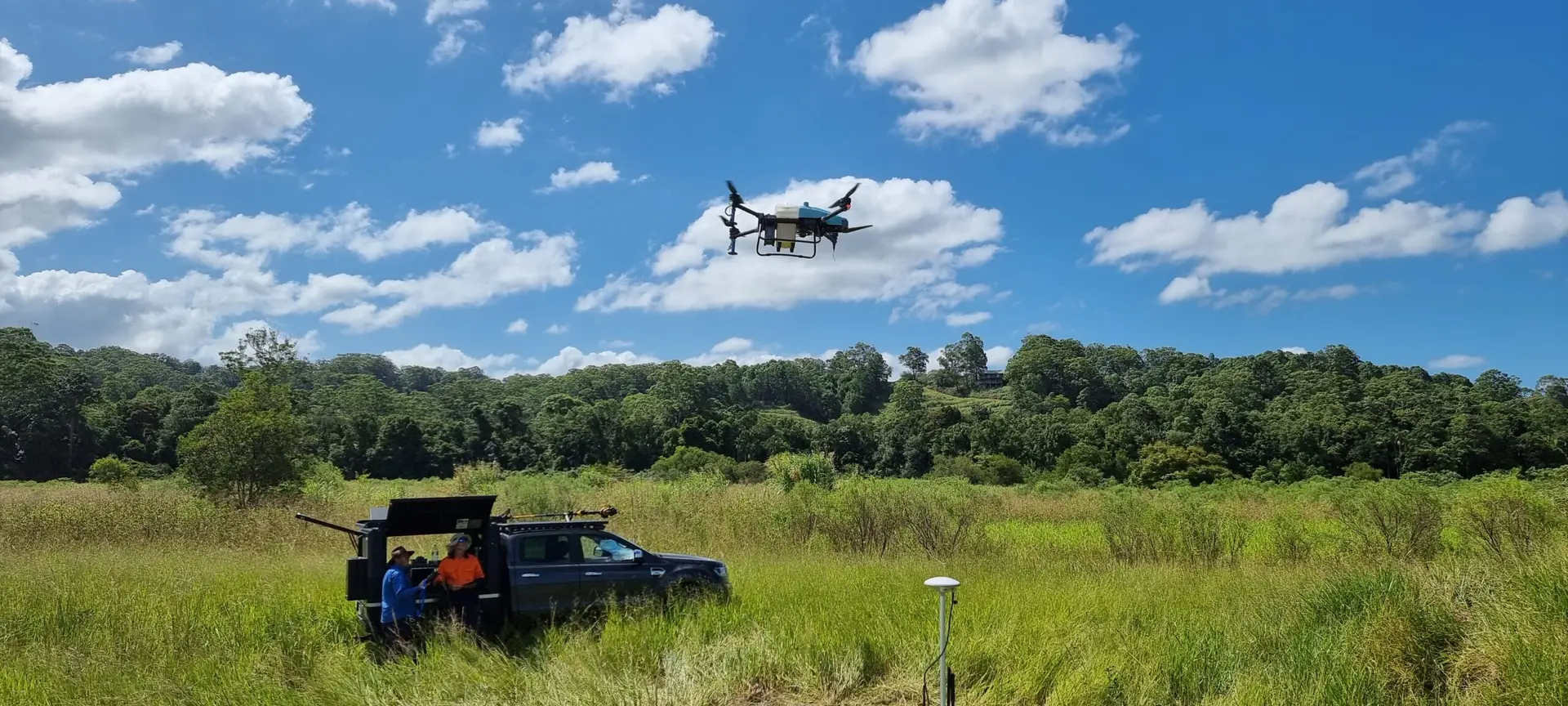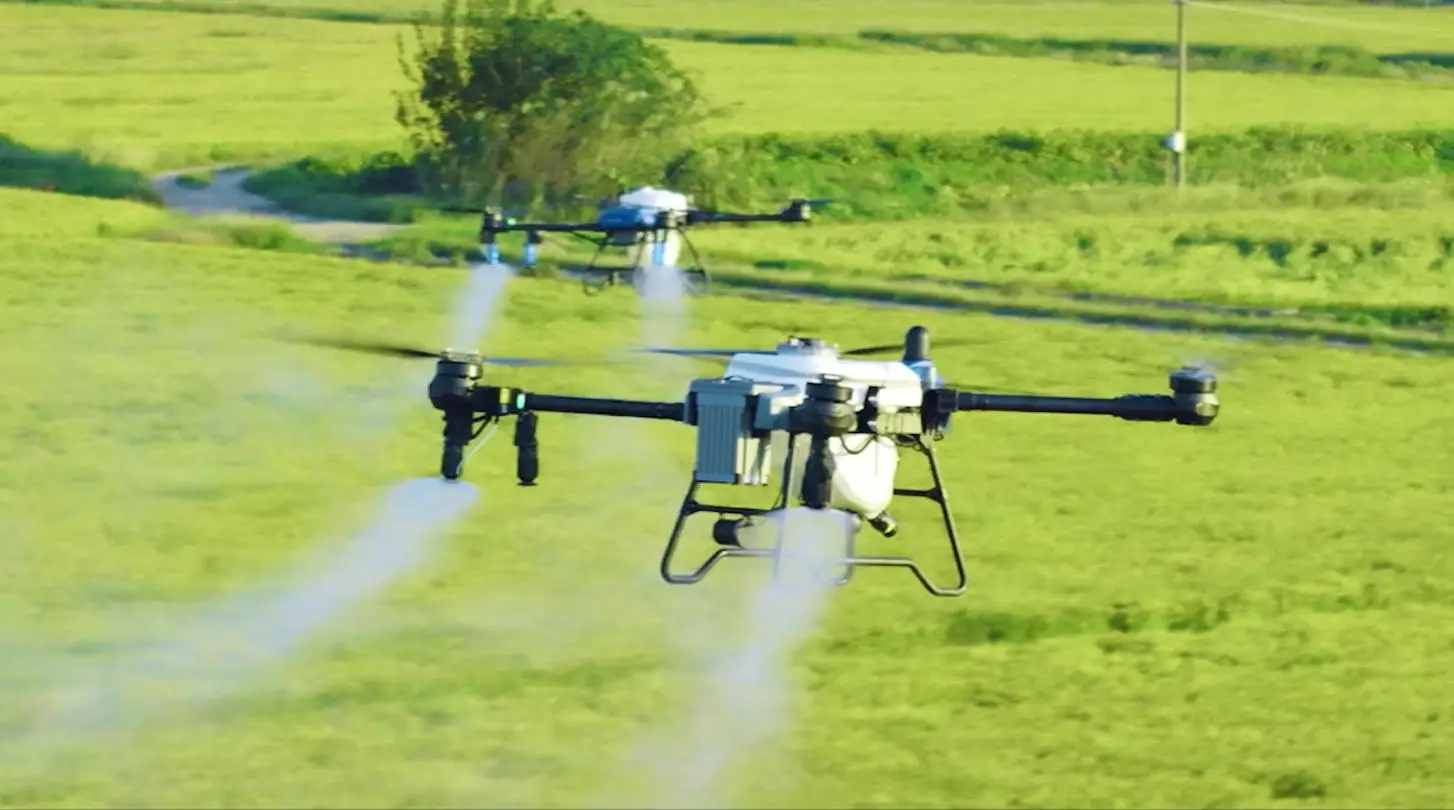

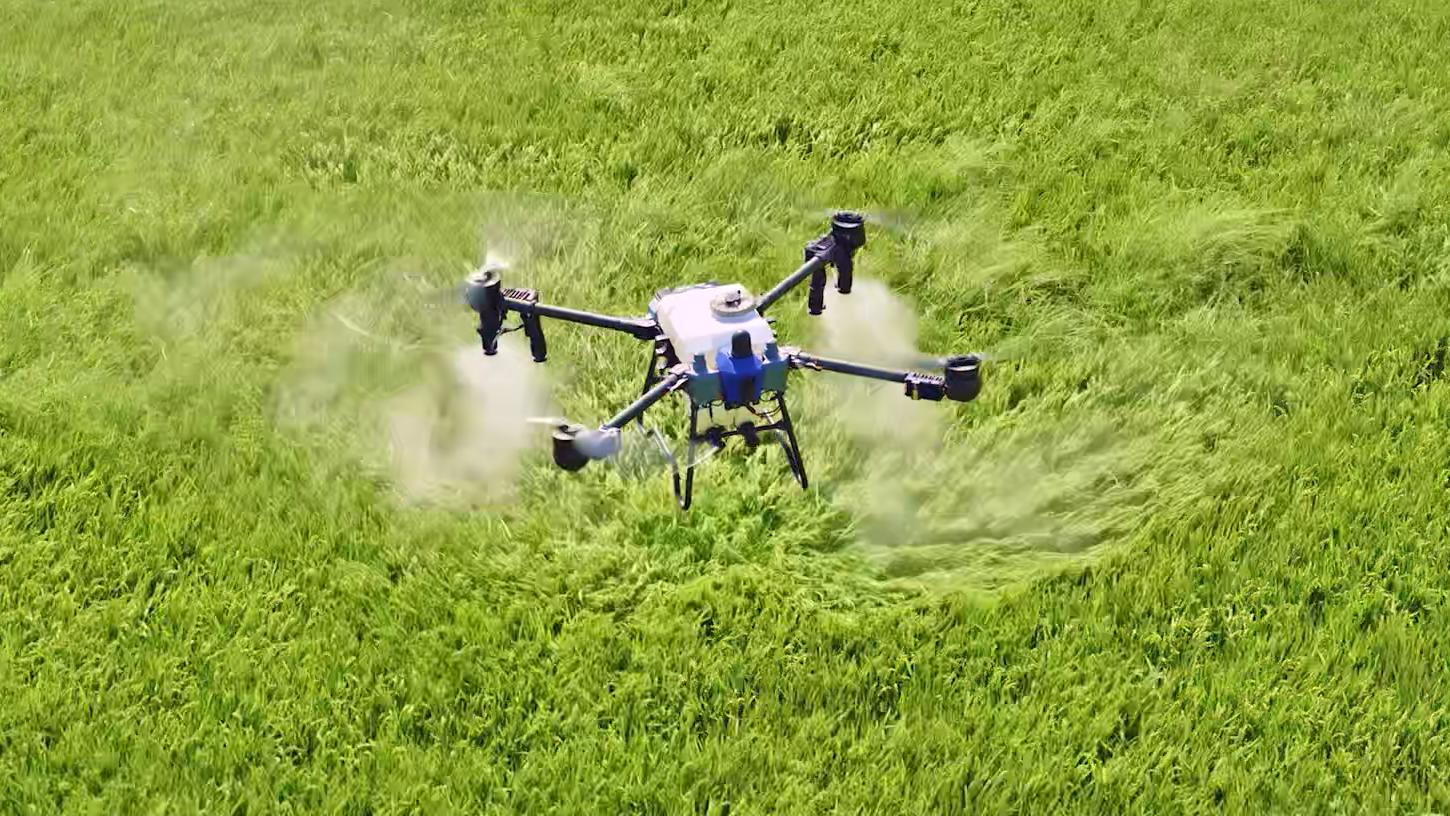
The best agricultural spray drone in Australia is the one matched to your hectares, your terrain and the jobs you actually do most. A compact 18.5-litre machine gets you airborne quickly on orchard rows. A 70-litre heavy-lift platform earns its keep on broadacre. In February 2026 an EAvision J150 treated 100 hectares in a single North Queensland morning — roughly 21 hectares an hour including refills and battery swaps. That is the number that matters, not the tank size on the spec sheet.
Why growers are switching
Spray drones do jobs a ground rig cannot. They spray waterlogged paddocks a tractor would bog in, treat steep and terraced ground, get onto a crop the morning after rain without a wheel track, and keep an operator out of the spray zone. The catch is honest enough: a drone will not out-muscle a wide self-propelled boom on flat open country, and you will refill and swap batteries far more often.
- Wet ground: spray straight after rain, no bogging, no compaction.
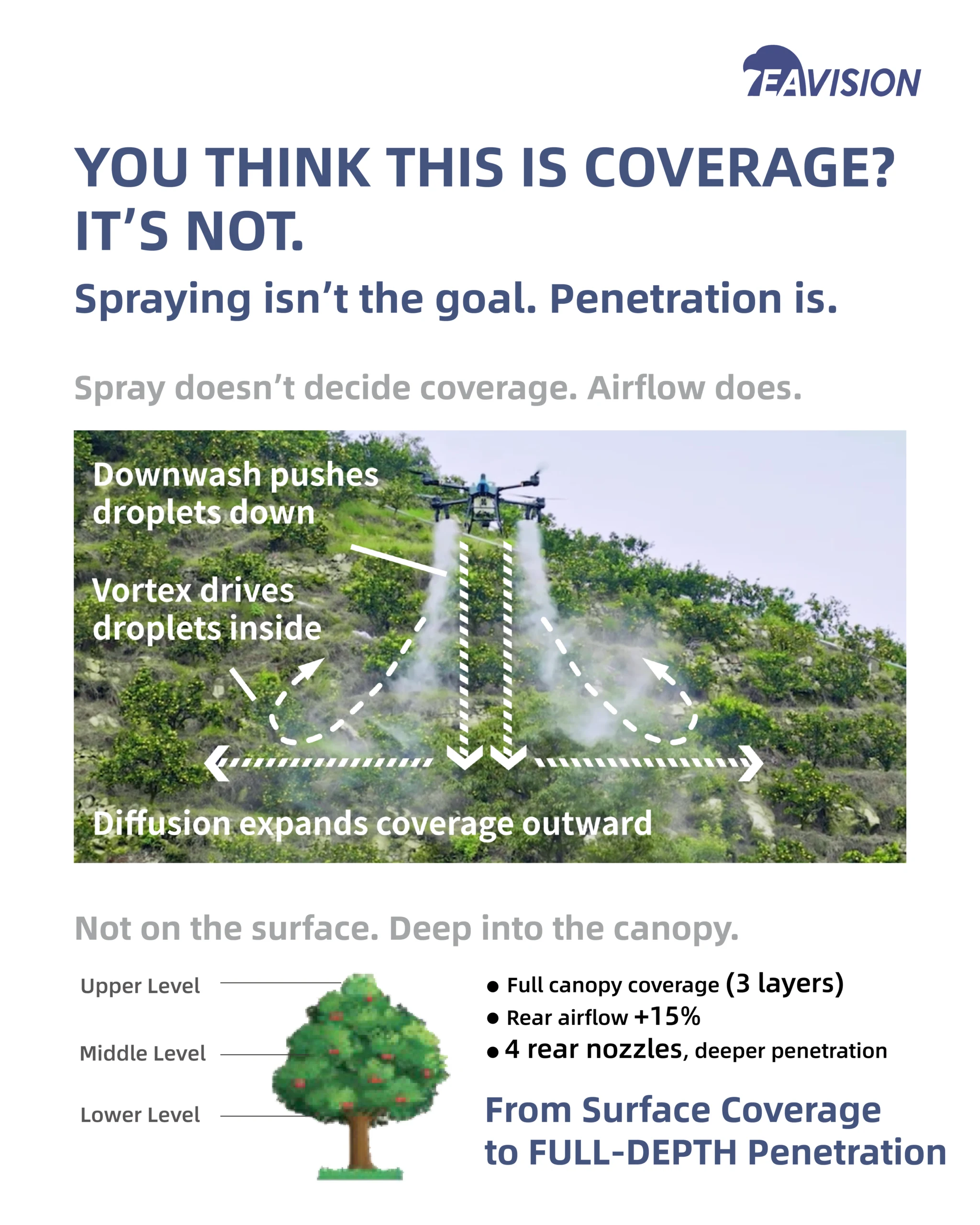
- Difficult terrain: all EAvision Drones excel in steep terrain environments.
- Tight windows: launch in minutes rather than wait for ground to carry a rig.
What these drones actually do
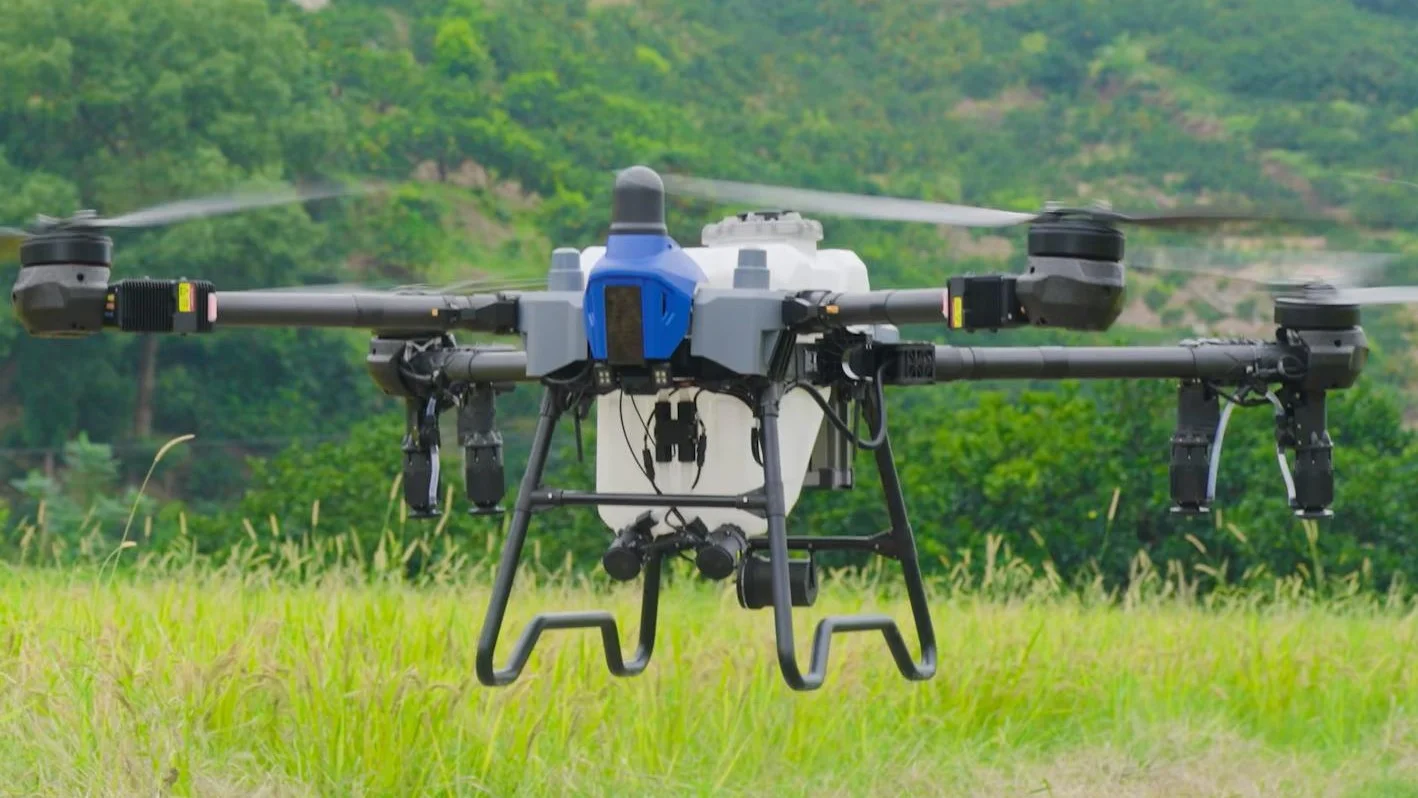
Most EAvision platforms are multi-role — swap the liquid tank for a hopper and the same airframe broadcasts granular product. One correction worth making, because it is commonly got wrong: the EAvision S40 is a spray-only machine. It carries an 18.5-litre tank and no spreader is available for it. If you want to spread fertiliser or seed, that is the J70, J100 or J150.
The EAvision range compared
Figures are from EAvision's technical specification sheets.
| Specification | S40 | J70 | J100 | J150 |
|---|---|---|---|---|
| Spray tank | 19.5 L | 45 L | 45 L or 60 L | 73 L |
| Spreader | Not available | 70 L / 50 kg | 70 L / 50 kg | 100 L / 75 kg |
| Spray width | 3–10 m | 4–10 m | Up to 10 m | 4–15 m |
| Max flow rate | 12 L/min | 16 L/min (or 24 L/min) | 24 L/min | 40 L/min |
| Battery | 20 Ah | 29 Ah | 29 Ah | 45 Ah |
| Charge (30–95%) | 9 min | 9 min | 9 min | 9 min |
| Max take-off weight | 53 kg | 110 kg | 115 kg | 145 kg |
| Empty weight | 26 kg | 56 kg | 54.6 kg | 75 kg |
| RTK accuracy | ±10 cm | ±10 cm | ±10 cm | ±10 cm |
| Weather rating | IPX6K | IPX6K | IPX6K | IPX6K |
Full sheets: S40, J70, J100, J150. For a side-by-side against the DJI Agras T100 and XAG P150 Pro, see our feature comparison.
Choosing for your farm size
- Orchards, vineyards, small blocks: the S40. 26 kg empty and 940 × 700 mm folded, so one person moves it between sites.
- Mixed farming, contractors starting out: the J70. Spraying and spreading on one airframe at 110 kg all-up.
- Mixed farming, more daily area: the J100. The 60-litre tank option and 60 kg lift make it the all-rounder.
- Broadacre and contracting: the J150. 70 litres at 40 L/min is the highest output in the range.
The 150 kg line is worth knowing about
CASA sorts drones by gross weight. A medium RPA is more than 25 kg and not more than 150 kg. Above that it becomes a large RPA, which brings a certificate requirement and a separate CASA approval to operate under CASR 101.255 and 101.275 — a materially heavier regime.
Every EAvision model sits under that line at maximum take-off weight. Some competing heavy-lift platforms do not. If you are cross-shopping, check the fully loaded weight, not the airframe weight — the category is set by gross weight, and it changes what you are legally required to hold.
What 100 hectares in a morning actually looked like
Rather than a lab figure, here is a logged Australian job — a J150 in North Queensland, February 2026, summer heat with rain threatening.
- 32 flights between 7:05am and 11:49am — 4 hours 45 minutes, or about 21 hectares per hour
- 2,207 litres at 20 L/ha, roughly 465 litres an hour through the machine
- 68 litres and 3.125 hectares per flight, at 46 km/h with a 12 metre swath
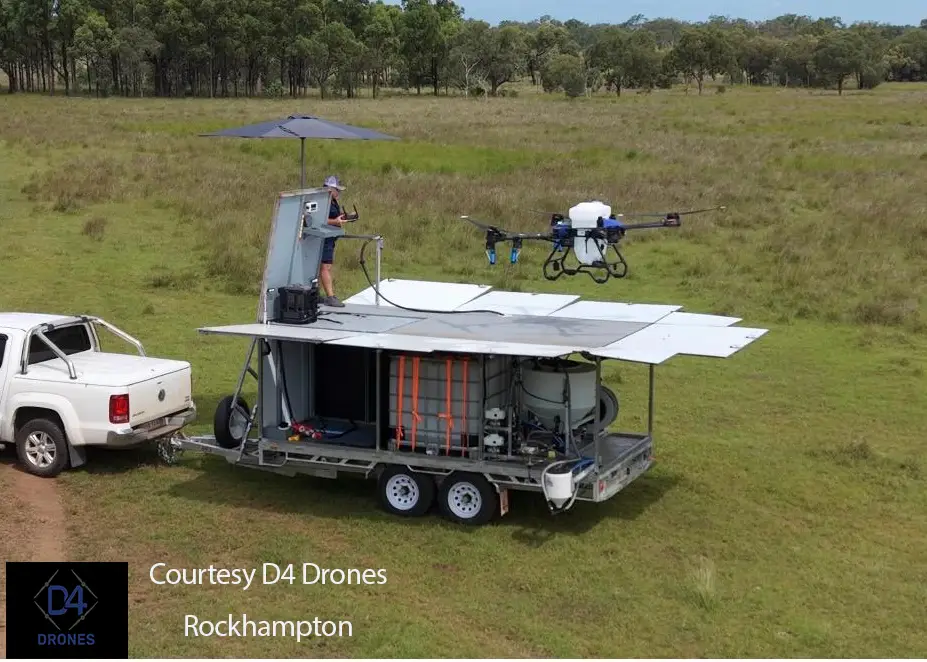
- Ground support: three 45 Ah batteries, a 13,000 W charger, a 24 kVA generator, a 1,000 L IBC
- About 30 minutes of the morning was spent waiting on water, not flying
That last point is the honest one: your ground setup determines hectares per hour at least as much as the drone does. Full write-up in our J150 productivity study.
What CASA requires before you spray
Current as at 06/08/2026. Rules change — confirm your obligations with CASA and your state department before you fly.
There are two separate layers, and people routinely conflate them. The aviation layer is CASA; the chemical layer is your state agriculture department. You need both.
Under CASR 101.022, a spray drone between 25 kg and 150 kg gross is a medium RPA. Every EAvision model exceeds 25 kg loaded. That means a Remote Pilot Licence in every case — and above 25 kg the rating is type-specific, tied to the aircraft you fly. Commercial operation also requires an operator's certificate (ReOC) under CASR 101.270.
There is a genuine carve-out. Under CASR 101.237 you can spray land you own or occupy without a ReOC, provided you hold the licence, operate in standard RPA conditions, and nobody involved receives payment. Spray a neighbour's paddock or take a dollar for it and the exclusion falls away.
The point almost everyone gets wrong: CASA does not issue an agricultural or chemical-dispensing approval for drones. CASR Part 137, which governs aerial application, applies only to aeroplanes. Your authorisation to apply chemical comes from your state, not from CASA.
| State | What you need |
|---|---|
| Victoria | An RPA Operator Licence and a Pilot (Chemical Rating) Licence. Units AHCCHM307 and AHCCHM304. Daylight only; fully autonomous operation not permitted. |
| Queensland | A pilot chemical rating licence plus an aerial distribution contractor licence. Landholders spraying their own property still need the pilot licence. |
| New South Wales | EPA licensing under the Pesticides Act 1999 applies to remote pilots. Confirm with NSW EPA. |
| Northern Territory | A pilot chemical rating licence and business licence, both expressly including UAVs. AQF level 3 training. |
| Western Australia | RPA are covered by the Aerial Application Regulations 2018. A limited own-land, unpaid exemption applies, but chemical competencies are still required. |
The label governs the application too. The APVMA requires drone application to comply with aerial label directions, including buffer zones and spray quality. If the label does not approve aerial or spot spraying, you cannot apply it that way regardless of your licence.
Frequently Asked Questions
What are the best agricultural spray drones in Australia?
The best drone is the one matched to your hectares and terrain. Compact machines like the EAvision S40 (18.5 L) suit orchards, vineyards and small blocks. The J70 and J100 (45–60 L) suit mixed farming. The J150 (70 L, 40 L/min) suits broadacre and full-time contracting. Local parts availability and training matter as much as the specification.
How many hectares can a spray drone cover in a day?
An EAvision J150 covered 100 hectares in 4 hours 45 minutes in North Queensland in February 2026 — about 21 hectares per hour at a 20 L/ha rate, including refills and battery swaps. Real coverage depends on water logistics as much as the drone; roughly 30 minutes of that job was spent waiting on water.
Do I need a licence to fly an agricultural spray drone in Australia?
Yes. Spray drones between 25 kg and 150 kg gross are medium RPA under CASR 101.022, requiring a Remote Pilot Licence with a type-specific rating. Commercial work also needs an operator's certificate, unless you are spraying land you own or occupy and receiving no payment. Separate state chemical licensing applies in every case.
Can a drone spread fertiliser as well as spray?
Yes, on the J70, J100 and J150. The J70 and J100 take a 70-litre hopper rated to 50 kg, and the J150 takes a 100-litre spreader rated to 75 kg. The S40 is spray-only and no spreader is available for it.
Talk it through before you spend
Sizing a drone on a spec sheet is how people end up with the wrong machine. Tell us your hectares, your terrain and the spray-versus-spread split, and we will tell you which model fits — including when the answer is the cheaper one. Get a quote or call 1300 663 221. To compare pricing first, see our J150, J100 and J70 packages.
About the author. Sean Mandile is a Director and General Manager of EAvision Australia, with more than 30 years in aviation and six years in the agricultural drone sector. He ran and documented the North Queensland J150 productivity trial cited in this guide.
Specifications are from EAvision technical sheets and subject to change. Regulatory information is current as at 06/08/2026 and general in nature — confirm your obligations with CASA and your state agriculture department before operating.